 Submit
HOT BUTTON PRESS: Contemporary Controversies|Pamphlet Series|Essays on Issues of Aesthetics & Meaning||Ann Fulleros|”THE ROMANTICIZATION OF SUFFERING”

Jeff Streeby
November 5th, 2026


HOT BUTTON PRESS: Contemporary Controversies Pamphlet Series
Essays on Issues of Aesthetics & Meaning
Ann Fulleros
THE ROMANTICIZATION OF SUFFERING
Click on the title to download the free PDF pamphlet.
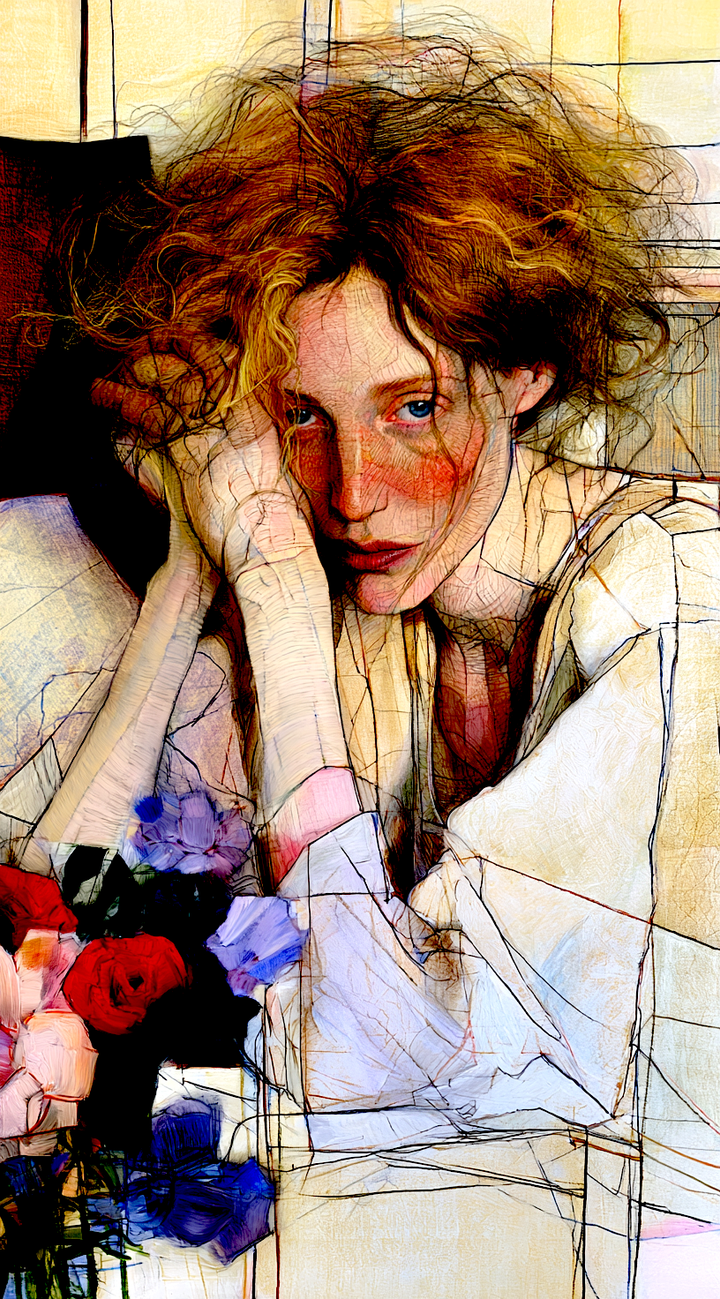
The First Endless Day by O:JA&L staff creative
MUST WRITERS BE BROKEN TO CREATE GREAT ART?
There is a peculiar cruelty in the way literature celebrates suffering. A writer loses someone, and suddenly the world expects a masterpiece. A poet experiences heartbreak, and readers anticipate beautiful verses. A novelist survives personal devastation, and critics search for the artistic significance of the wreckage. Pain becomes material. Trauma becomes inspiration. Misery becomes a credential. And somewhere along the way, we have confused the ability to transform suffering into art with the belief that suffering is necessary for art to exist. The literary world has long been fascinated by the tortured artist: the misunderstood genius, the wounded poet, the novelist whose personal destruction supposedly gives their work extraordinary depth. Their suffering becomes inseparable from their reputation, sometimes overshadowing the craft that made their writing remarkable.
But what happens when a culture begins to admire the wound more than the work?
The romanticization of suffering is not merely an outdated literary myth. It is an artistic and ethical problem that risks rewarding self-destruction, commodifying trauma, and diminishing creative expression that emerges from joy, stability, and ordinary human experience. Great literature can emerge from suffering. That does not mean suffering creates greatness.
THE MYTH OF THE TORTURED GENIUS
The relationship between artistic achievement and personal anguish has occupied literary culture for centuries. Romanticism helped establish the image of the artist as an exceptional, emotionally intense individual whose inner turmoil distinguished them from ordinary society. Later generations inherited and reshaped this mythology.
Consider Sylvia Plath, whose poetry is frequently interpreted through the circumstances of her life and death. Her work deserves recognition for its technical precision, unsettling imagery, and linguistic force. Yet popular fascination with her suffering can threaten to reduce her artistic accomplishments to biographical tragedy.
Similarly, Virginia Woolf’s experiences with psychological distress are often discussed alongside her literary achievements. Such biographical inquiry can illuminate aspects of her writing, but it becomes reductive when illness is treated as the secret ingredient of genius rather than one dimension of a complex intellectual life.
The distinction matters. A writer’s suffering may influence their subject matter, emotional vocabulary, or understanding of the world. It does not automatically explain their command of narrative structure, rhythm, metaphor, characterization, or form. Those achievements require artistic labor. To attribute extraordinary writing primarily to suffering is to overlook the discipline, experimentation, revision, and intellectual engagement through which literature is actually produced. Pain may provide an experience worth examining. It does not provide the skill necessary to examine it well. A broken heart cannot construct a compelling stanza on its own. Depression does not automatically produce a coherent novel. Grief may generate urgency, but urgency is not the same as artistic excellence.
The tortured-genius narrative mistakes a possible source of artistic material for the mechanism of artistic creation.
WHEN TRAUMA BECOMES LITERARY CURRENCY
Contemporary literary culture has not entirely abandoned the tortured artist. It has found new ways to market the figure. Personal essays, memoirs, and confessional poetry frequently occupy spaces where emotional disclosure and literary value intersect. Stories of abuse, loss, discrimination, illness, and survival can challenge silence and expand public understanding. Their publication can be culturally necessary.
The problem emerges when suffering becomes an expectation rather than one possible subject among many. Writers may encounter an implicit demand to make their experiences increasingly intimate, devastating, or sensational to establish the significance of their work.
For writers from marginalized communities, this pressure can be especially troubling. When literary institutions disproportionately recognize narratives of oppression, they risk narrowing the public understanding of those communities to their experiences of injury.
A writer should be able to explore cultural identity without recounting discrimination, write about womanhood without narrating victimization, or examine family relationships without producing a catalogue of trauma. Yet the marketability of painful stories raises an uncomfortable question: Are readers and publishers interested in the full complexity of human experience, or have certain forms of suffering become more commercially recognizable than others? This is not an argument that publishers universally prefer trauma narratives. Such a claim would require systematic evidence about acquisitions, editorial decisions, and reader demand. It is, however, a legitimate criticism of literary practices that promote an author’s suffering as the principal reason their work deserves attention.
When the wound becomes the selling point, the writer risks becoming secondary to the experience being sold. The result is a troubling inversion: instead of evaluating how effectively an author transforms experience into literature, audiences may begin evaluating how much suffering the author endured. Literary merit becomes confused with biographical severity. But suffering is not a competition, and artistic excellence cannot be measured by the magnitude of personal devastation.
THE FALSE OPPOSITION BETWEEN HAPPINESS AND DEPTH
Perhaps the most damaging consequence of romanticizing suffering is the assumption that happiness produces shallow art. Under this logic, anguish creates complexity while contentment produces sentimentality. Darkness signifies intellectual seriousness; joy suggests naïveté. A writer who has endured tragedy is imagined to possess greater emotional authority than one whose life has been comparatively peaceful.
This hierarchy is intellectually indefensible. Joy can be as psychologically complex as grief. Love can reveal contradictions as profound as betrayal. Domestic stability can expose tensions involving identity, responsibility, belonging, and freedom. Ordinary experiences can illuminate social structures that spectacular tragedies leave unexplored.
Jane Austen’s fiction demonstrates that the rituals of everyday life can sustain sophisticated literary examinations of class, gender, marriage, money, and moral judgment. Her achievement does not depend upon presenting suffering as the exclusive route to insight. Likewise, the poetry of Mary Oliver frequently locates philosophical significance in attention to the natural world. Wonder, observation, mortality, and gratitude coexist in her work without requiring anguish to serve as the primary measure of seriousness. These writers differ enormously in style and historical context, but both complicate the assumption that literary depth requires a visibly tormented creator.
Literature does not become profound merely because its subject is painful. Nor does it become superficial because its subject is beautiful.
Depth emerges from perception, complexity, and execution. The ability to notice an ordinary moment and reveal its hidden significance may require as much artistic intelligence as the ability to describe catastrophe. Indeed, a culture that treats happiness as artistically inferior risks misunderstanding the emotional range of literature itself. Human existence is not composed exclusively of wounds. Why should our standards of literary excellence suggest otherwise?
THE COUNTERARGUMENT: SUFFERING CAN PRODUCE NECESSARY ART
Defenders of the tortured-artist tradition may argue that suffering exposes individuals to truths that comfort allows them to avoid.
There is merit in this position. Experiences of grief, injustice, displacement, and psychological distress can alter perception. They may provoke urgent questions about power, mortality, identity, and human vulnerability. Literature born from such experiences can challenge complacency and make neglected realities visible. To dismiss the artistic significance of suffering would be as reductive as glorifying it. The issue is not whether suffering can contribute to great art. Clearly, it can. The issue is whether suffering should be considered a prerequisite for greatness, an indication of superior authenticity, or a condition worth preserving for the sake of creativity.
Those propositions are fundamentally different. Research into creativity and psychological disorders has examined possible associations between particular conditions and creative achievement. Such findings are complex, and correlations cannot establish that psychological illness causes artistic excellence or that treatment diminishes creativity. The existence of artists who suffered profoundly does not prove that their suffering was necessary for their accomplishments. It is equally plausible that some writers produced extraordinary work despite conditions that made sustained creative labor more difficult. A literary culture that ignores this possibility risks transforming hardship into destiny. Worse, it may encourage vulnerable writers to fear that healing will deprive them of their artistic identity. That fear deserves to be challenged rather than celebrated.
TOWARD A LITERARY CULTURE THAT VALUES THE WORK, NOT THE WOUND
Rejecting the romanticization of suffering does not require sanitizing literature or discouraging confessional writing. It requires changing how artistic value is recognized and discussed.
Publishers and editors should resist promotional language that reduces authors to their most painful experiences. Biographical context may be relevant, but it should not substitute for substantive engagement with literary craft. Critics should examine structure, language, originality, and thematic complexity rather than treating the intensity of an author’s suffering as proof of authenticity. Readers should recognize that disclosure is not an artistic obligation. Writers are entitled to privacy, ambiguity, invention, and silence about experiences they do not wish to transform into public material. Most importantly, writers themselves should be free to create without feeling obligated to remain wounded.
An author who once wrote about grief should be allowed to write about happiness. A poet known for heartbreak should be permitted to explore humor. A novelist whose earlier work emerged from trauma should not have to reproduce that trauma to retain literary credibility.
Artistic growth may involve changing subjects, styles, and emotional registers.
Healing is not a betrayal of one’s artistic identity. Nor is peace evidence that a writer has exhausted their creative possibilities. A writer does not become less perceptive by becoming happier. They may simply begin noticing different things.
THE WRITER IS MORE THAN THE WOUND
The most enduring literature does not merely document suffering. It transforms experience into meaning through the deliberate choices of an artist. Those choices deserve recognition independent of the pain that may have preceded them. We should question any literary culture that finds a writer’s suffering more compelling than their survival, or their destruction more interesting than their development.
There is nothing inherently noble about remaining miserable for the sake of artistic credibility. The writer who survives heartbreak and discovers joy has not abandoned depth. The poet who learns to live peacefully has not forfeited authenticity. The novelist who no longer inhabits the darkness that shaped an earlier book has not lost the right to create something extraordinary. Their artistic possibilities have expanded, not diminished.
Perhaps the most radical challenge to the tortured-genius mythology is not another masterpiece written from despair. Perhaps it is a masterpiece written by someone who has learned to live without it.
Great art does not require a broken artist. It requires an artist capable of seeing, questioning, imagining, and creating. Suffering may enter the work. It may even change the work forever. But it should never become the price a writer is expected to pay for greatness. And literature should never demand that an artist remain wounded simply because the world has learned to admire the scar.
About the writer:
ANN FULLEROS is a Filipino writer and poet whose work explores memory, identity, emotional resilience, and the complexities of human experience. Her poetry and fiction have been selected for publication in literary magazines and anthologies. Through her writing, she examines the relationship between personal experience and artistic expression, with particular interest in the ways literature transforms vulnerability into meaning.
Image: The First Endless Day (SI-assisted digital image) by O:JA&L staff creative. 2026. Public domain via Midjourney AI.
This project was made possible, in part, through support from
Richard Stimac and his new book BLOOD, WATER, AND STONE
available now from Spartan Press.
OJAL Art Incorporated, publishing since 2017 as OPEN: Journal of Arts & Letters (O:JA&L) and its imprints Buttonhook Press, HOT BUTTON PRESS Contemporary Issues, and HIGH BUTTON PRESS Contemporary Art, supports writers and artists worldwide.
O:JA&L’S FREE PRESSES
CLICK ON THE IMPRINT TITLES TO EXPLORE THE OFFERINGS
Buttonhook Press
HOT BUTTON PRESS: Contemporary Controversies
HIGH BUTTON PRESS: Contemporary Art
FIREFIGHT PRESS: Trench Arts & Letters
DALLY POST PRESS: Cowboy Poetry
QUARTOS & QUIRES: Writing for Page, Stage & Screen
HAL: Heuristic Analysis Library
- creative writing and suffering
- great art without suffering
- joy in literature
- Virginia Woolf
- Sylvia Plath
- healing and creativity
- art and emotional pain
- trauma memoir
- confessional writing
- literary culture
- psychology of creativity
- Ann Fulleros
- literary trauma narratives
- trauma in literature
- writers and mental health
- pain and artistic creativity
- trauma and creativity
- tortured writer myth
- tortured artist myth
- suffering in literature
- romanticization of suffering