 Submit
Americana|Poetry: All forms & styles||Jeffrey Gray|"Homiletic Ode to the Everly Brothers"

Jeff Streeby
April 19th, 2023


Explore O:JA&L's Buttonhook Press offerings on Amazon.
Subscribe to the O:JA&L YouTube channel.
Become an O:JA&L Member through Patreon.
Jeffrey Gray
Homiletic Ode to the Everly Brothers
Explore more of Jeffrey Gray's work in the free PDF pamphlet The Aquarian Foundation,
available now from O:JA&L's Buttonhook Press.
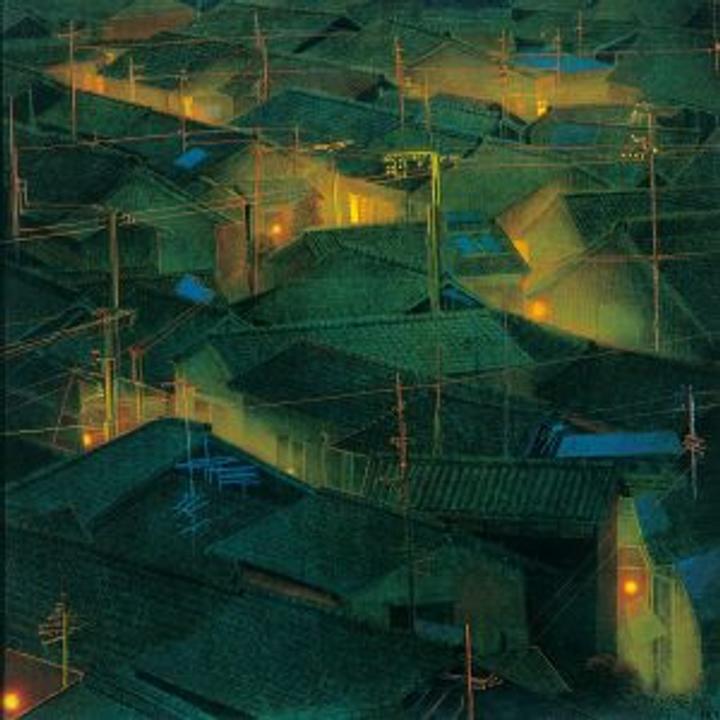
Distant Night by Hanno Karlhuber
It’s 1957 on the Danny Thomas show, you can see
he’s patronizing them, they’re too innocent to know,
with their courtly voices and Platonic hair
belonging to a visionary ‘50s still in the air
a few years later with the English invasion
and their star’s decline. But the fifties weren’t done
till almost ’66, and, as the new thing started up,
the brothers were booking “Bye Bye Love”
nostalgia tours, forging on but out of phase, the
spell of the raw by then become TV paisley
(neither mode was their poetics), and, backed by psychedelic
scrims on Sullivan, they seemed, still young, relics
in their suits and ties and thick hair that predated
the sixties hair and had a different meaning—they must have hated
the whole scene, though they never winced
at the flared pants and Peter Max prints:
none of it was alien but rather a bizarre,
sad torsion of the forces that had come so far
to burst too soon, misunderstood, and even there the purity
of their voices, conceived in a clarity
hard to imagine—from the timbre, effortless,
of Ike Everly’s guitar—soared past the time’s ugliness,
uglier almost than our own, what only color
TV can capture, like an MRI of the squalor
at its heart. Yet out of the wilderness they came,
like Abe Lincoln. Before the split—before they became
strangers for a decade, you still hear it, in spite of the violins,
in “Let it Be Me.” Listen all you boards and syndicates
(Burroughs wrote in ’64)--even at 13 I knew
they were the future, despite the fact it’s gone, a sound that grew
from Sputnik as much as from rambling men, echoing
the future’s shape. Not emotion but oxygen, sowing
in the wind a timbre no longer country but vibrating
in the hammered heat of cities, translating
pain into pulse. Burroughs said in Denver:
“You notice something sucking all the flavor
out of food, out of sex?” Consider the tenderness of
the instinct to restore it, the smooth scandal of
pleasure, the “natural talent”…Chet Atkins loved their soft
manners, their harmonies, always bought them coffee
and pie in Nashville in the early days. Then Lennon
Crosby Stills Simon the Byrds everybody went in
search of the sound, seeing it passing and how
much would go with it, violins or not; somehow
at 13 I saw the memory of that tone is what
we’d have, the facts sinking and every sign lassoing what
it could in its long arc toward now. The radio
told me and the suburban patio
parties in summer, and a couple of years
later driving north at night, those layers
of light seeping out of the woods in search of a name to set
against an almost complete unconsciousness, lacking yet
the mind-drugs that lay a few years off to hear it
unmistakably: the sound of time as it traces its
passing, rooted less in Brownie, Kentucky, than in the way
we watch things go, the red delay, so that now as they
both rush away from us into unknowing, thick
with time, the dirt road to the past lies there as it
did always, branching intermittently, runnels spilling
in the April of language where music made us still, and
where in the skirts of the mountains the sea echoes
and a microscopic fold of tissue opens and closes
on the surface of the right hemisphere allowing
me to propitiate at last tonight this dream of them.
About the writer:
Jeffrey Gray’s poetry has appeared in The Atlantic, the Yale Review, PN Review, Lana Turner (forthcoming), TriQuarterly (forthcoming), Western Humanities Review, and others. He is the author of Mastery’s End: Travel and Postwar American Poetry (University of Georgia Press 2005) and of many articles on American and Latin American poetry, in journals such as Callaloo, Contemporary Literature, Chronicle of Higher Education, Profession, and American Poetry Review. Gray is also the English translator of Rodrigo Rey Rosa’s novels The African Shore (Yale University Press 2014) and Chaos, a Fable (Amazon Crossing 2018), and editor or co-editor of several anthologies, including The News from Poems: Essays on the New American Poetry of Engagement (University of Michigan Press, 2016) and The New American Poetry of Engagement: A 21st Century Anthology (McFarland, 2013). Jeffrey Gray is a professor at Seton Hall University and lives in Ocean Grove, New Jersey, and Alghero, Sardinia. Explore more of Jeffrey Gray's work in the free PDF pamphlet The Aquarian Foundation, available now from O:JA&L's Buttonhook Press.
Image: Distant Night by Hanno Karlhuber (contemporary). Oil and tempura on hardboard. 70 x 70 cm. 2000. By free license.


OJAL Art Incorporated, publishing since 2017 as OPEN: Journal of Arts & Letters (O:JA&L) and its imprint Buttonhook Press, is a 501(c)(3) nonprofit corporation supporting writers and artists worldwide.
Become an O:JA&L Member through Patreon.
- Americana
- creative writing
- Homiletic Ode to the Everly Brothers
- Jeffrey Gray
- literary arts
- narrative poetry
- poetry: all forms & styles