 Submit
The O:JA&L Masters Series|Mixed Forms: Haibun|An Essay on Craft||Featured Writer: Roberta Beary|”The Heart of Haibun"

Jeff Streeby
May 15th, 2026


The O:JA&L Masters Series
Mixed Forms: Haibun
An Essay on Craft
Roberta Beary
THE HEART OF HAIBUN
A Journey in Four Parts
Haibun lives in the seam between story and poem: a brief passage of prose set beside haiku that deepens, complicates, and surprises. In this essay, Roberta Beary guides writers through the form’s essentials—what haibun is (and isn’t), how haikai style favors clarity over ornament, and how juxtaposition creates resonance without explanation. Moving in four parts, she deconstructs an editorial definition, revises a sample haibun across drafts, examines published examples for craft lessons, and closes with prompts writers can use today.
Click HERE to to explore or download the free PDF chapbook THE HEART OF HAIBUN by Roberta Beary.
The Art of Haibun by Kevin Beary
PART I
WRITING THE HAIBUN
Memoir, fairytale, short story, travel journal, and dream sequence are terms that have been used to describe haibun. I believe that haibun continues to evolve and can encompass anything within the writer’s experience and/or imagination.
Many definitions of haibun exist, but as longtime haibun editor for the print journal Modern Haiku, which has been published since 1969, I prefer its definition. see http://www.modernhaiku.org/submissions.html
Haibun is a prose poem that uses embedded haiku to enhance the composition’s overall resonance and effect. Modern Haiku publishes several haibun in each issue. The following principles guide the editors in choosing among haibun submissions:
(1) Each verse should be able to stand on it own as a haiku, without reference to the prose; (2) The prose should be composed in haikai style—that is, with an eye to brevity, objectivity, and non-intellectualization; (3) The haiku and the prose should stand in the same relationship to one another as do the two parts of the haiku—that is, one part should not repeat, explain, or continue the other, rather the juxtaposition of the two should lead the reader to experience added insight or resonance. Haibun are generally, but not necessarily, titled.
Let’s deconstruct the above definition.
- Each verse should be able to stand on its own without reference to the prose.
In other words, would the haiku in your haibun be accepted by an outstanding haiku/poetry journal? If yes, keep it in the haibun. If no, put it aside. Keep trying for a haiku that is perfect for the haibun. Sometimes, many attempts will be needed.
- The prose should be composed in haikai style—that is, with an eye to brevity, objectivity, and non-intellectualization.
In other words, stay away from overly poetic language, keep the prose short, keep the prose in the present tense. And most importantly, make sure you describe something that happens, and the narrative has a beginning, middle and end (although not necessarily in that order)
- The haiku and the prose should stand in the same relationship to one another as do the two parts of the haiku—that is, one part should not repeat, explain, or continue the other, rather the juxtaposition of the two should lead the reader to experience added insight or resonance. Haibun are generally, but not necessarily, titled.
In other words, you do not need to give the reader various hints as to what is happening in your haibun by duplicating words in the title, prose, and haiku. Trust your reader to figure out what is happening in the haibun. Remember to show, not tell. Also, it is very rare that a haibun can work with no title. To give your haibun a better chance of being accepted, give your haibun a title.
Let’s take up a haibun writing challenge. Start by thinking of something that happened in your past, one that has stayed with you throughout the years. It can be a small yet significant action from your past. Perhaps it was the first time you tied your shoelaces without help from a parent or older sibling. Perhaps it was the first time you walked to school alone. Perhaps it was the first time you were alone at home. Whatever this past occurrence, it should be one that has been your companion for many years, or even decades.
Let’s take the example of the shoelaces. The haibun’s title can be perfected later. For now, let’s use the placeholder title, Shoelaces. At this point, the same is true for the haibun’s single haiku. We will use a lower quality haiku, just to get something down. This haiku will be called a haiku-in-progress. For this example, we will use the Point of View of First Person Singular.
Here is a haibun I just created off this moment, without giving it too much thought.
DRAFT 1
SHOELACES
When I was a child, I didn’t know how to tie my shoelaces. Every day I would be late for school. I would have to wait for my older brother or my mother to tie my laces. They were always too busy doing something else and had little time for me.
shoelaces
the double-bow
of childhood
In this draft, the first thing that jumps out is the prose. It is in the past tense, which initially makes sense as the action happened a long time ago. In haibun less is more, and shorter is better. So too is the present tense. Even though the action occurred a long time ago, let’s see what a difference a shift of tenses from past to present can bring about. The second thing is that there is a lot of telling, and not much showing. The third thing is the lack of specificity. The timeframe of this haibun is too large. I will narrow it down to one morning. Finally, I will need to work on the haiku to bring it to a higher standard.
DRAFT 2
SHOELACES
I am five and know many things. I know not to touch the hot stove. I know how to clean my teeth in the morning and at night. I know how to get dressed in my school uniform for kindergarten. But I don’t know how to tie my shoelaces. After breakfast I wait in the kitchen for my older brother’s help. But he is finishing his homework. I walk to kindergarten with my laces untied.
shoelaces
the double-knot
of childhood
In the second draft, I have put the prose in the present tense. I have given the narrator a specific age, 5 years old, and a specific timeframe, a morning before kindergarten, and a specific place, the kitchen. Additionally, I have left the reader with a sense of foreboding in the last sentence of the prose. This new last sentence helps me see the haiku-in-progress in a different light. Instead of line two’s happy image of a double-bow, I change it to an uneasy image of a double-knot.
DRAFT 3
UNTETHERED
The final version of “UNTETHERED” appears in Crazy Bitches (MACQ Books, 2025).
I am five and know many things. I know not to touch the hot stove. I know how to clean my teeth in the morning and at night. I know how to get dressed in my school uniform for kindergarten, except my shoelaces. After breakfast I wait in the kitchen for my older brother’s help. He is finishing his homework. I walk to kindergarten with my laces untied. An older boy drops to his knees and double-bows my laces. He spends a long time down there, looking up every so often, but not at my face. I am five and there are many things I don’t know.
biopsy clouds all tied up in knots
Notice the new title, Untethered, gets away from the repetition of the word ‘shoelaces’ in the prose, while the revised haiku omits the word ‘shoelaces’ completely. When reading draft 3, consider the multiple meanings of untethered when viewed in light of the haibun as a whole. What is untethered? Is it the child, who is ignored at home? Or is it merely her untied shoelaces? Why does the older boy stop to help her? And where exactly is he looking ‘every so often’ when he raises his head? The answers will depend on the reader, each of whom brings their own childhood experiences into the haibun.
Consider when reading draft 3 that the prose now has an added layer of musicality, one achieved by linking and contrasting the ending I am five and there are many things I don’t know to its beginning (I am five and know many things).
Finally, the haiku shifts from the long ago past to the present. The child is now an adult. The shoelaces’ double-knots are replaced by the knots of uncertainty on the day of a biopsy. Do the knots represent the present, the past, or the future? It is up to the reader to decide. And in this way complete the haibun.
PART II
THE RULE OF FOUR:
PRACTICAL THINGS TO REMEMBER WHEN WRITING & SUBMITTING HAIBUN
RULE 1: SUBMIT YOUR BEST WORK
Do not expect journal editors to edit your submission. If an editor makes a suggested revision, either accept it or politely reject it. If rejecting the edit(s), thank the editor for their time. Editors receive many submissions and most do not have time to do email exchanges with submitters. If your haibun is not accepted for publication, do not complain to the editor.
RULE 2: CHOOSE THE RIGHT TITLE
The title is the first thing the editor, and later the reader, sees. If it does not pull the editor/reader into the haibun, they will stop reading. So, think of the title as a hook that pulls in the reader. The title should not give away what happens in the prose or the haiku. Finally, after reading the entire haibun several times, the reader should be able to look back at the title and see more than one meaning. Although single word titles are common, multiple word titles are more of an attention-grabber.
RULE 3: WRITE IN THE PRESENT TENSE IN A CONCISE, RISK-TAKING MANNER
Avoid rambling sentences and poetic language. Haibun is not prose poetry and abstract concepts will not work in haibun. Every haibun should have a beginning, middle, and end. Think in terms of a short narrative arc in which something happens. Take risks in your writing. Write a haibun in the form of a letter to a famous person or character, or try a haibun in the form of a to-do list, or an ekphrastic haibun based on a painting. There are no limits to one’s haibun imagination.
RULE 4: TRUST YOUR READER
Avoid spoon-feeding the reader by telling too much in the title, prose, and haiku. Most readers will be able to fill in the haibun’s white space based on their own experiences. Because of this, the haibun’s meaning is dependent on the reader, and different readers will find various meanings in the same haibun. Remember, the best haibun are those that have multiple interpretations.
PART III
AN EXAMINATION OF 3 PUBLISHED HAIBUN
First Person Point of View: Childhood Memory
LEARNING TO READ
Published in Presence #60 2018 / A Hole in the Light: The Red Moon Anthology of English-Language Haiku 2018 (Red Moon Press), Crazy Bitches (MACQ Books, 2025).
I was still a kid and she was my older brother’s friend. Sam. One day she cornered me at school. Pushed me against a concrete wall. Then kissed me. For years after that I stayed away from girls. Named Sam.
windowpane
the heart shape
of our breath
Some Common Threads in "Learning to Read::
Title: Look at the title. It has multiple meanings. On a basic level, it is about a child learning its letters. Learning how to string words together. Learning to read. A more layered interpretation is that it is about learning to read one’s own and other people’s desires. Learning to read one’s emotions and act upon them.
Prose: Risk Taking - a very private memory of the writer. But Is this what actually happened? Is it biography? Or auto-fiction, that is, a form of fictionalized autobiography? Follow the rule of Emily Dickinson: Tell all the truth but tell it slant. Be a ruthless writer. Remember that every experience, including those of family, friends, strangers, is grist for the haibun mill.
Haiku: Is the haiku able to stand on its own without relation to the title or the prose? In this haibun, the answer is yes.
Notice how each part of the haibun, the title, prose, and haiku, enhance one another without restatement or repetition. Consider the three parts of the haibun as a holy trinity of title, prose, haiku.
The Omniscient Narrator: Combining the Past with the Present
A Haibun that Bears Witness
KEEPER OF THE FLAME
Published in Presence #61 2018/ A Hole in the Light: The Red Moon Anthology of English-Language Haiku 2018 (Red Moon Press), Crazy Bitches (MacQ, 2025)
What she doesn’t know won’t hurt her. She doesn’t know her father wanted a son. Or that he thinks she inherited the stupid gene from her mother. Or that he called her Ugly Duckling when she was a baby, letting the ash from his cigarette fall on her in the bath.
What she doesn’t know won’t hurt her. That’s what her father always said. Right up until he left.
bonfire —
a tiny star
scars her wrist
Some Common Threads in "Keeper of the Flame:"
Title: Keeper of the Flame relates both to the prose (cigarette ash) and to the haiku (bonfire).
Prose: The prose is a combination of the past and present. Does this strengthen or lessen the haibun’s overall impact? While most haibun work well in the present tense, it is a rule that may be broken when doing so will elevate the haibun to a higher level.
Haiku: What is the setting and context of the haiku? Are we in the present or the past? Does the answer matter except for the fact that scars are permanent?
Reader: What feelings in the reader does this haibun evoke? The feelings will depend on the experiences of the individual reader. A reader who suffered physical abuse by a trusted adult may find that this haibun resonates more strongly than a reader raised in what is considered to be a happy home environment.
First Person Point of View: A Fictional Haibun in the Remote Past (A.D. 79)
POMPEII
Published in Grandmother’s Pearls (Dream Anthology), Alexis Rotella & Friends, Jade Mountain Press, 2021, Crazy Bitches (MACQ Books, 2025), revised version)
My brother and I link arms and walk the length of a small wood. He stops, strips off his top, and dips it in a cistern.
midday heat the scorched tips of olive trees
For a moment, Father is alive, the whip poised in his hand. Scars on my brother’s back burn my eyes.
birdsong stirring a crater of emptiness
A fire blazes in the distance. When we hear Vesuvius’ roar, it is too late. Still, we run, hand in hand. Hoping to outfox our fate.
day moon weaving its way through clouds of light
Some Common Threads in Pompeii:
Title: By using the word, Pompeii, as a title, no further explanation is needed for the reader to understand the setting.
Prose: This haibun is fiction and imagines a brother and sister living on their father’s estate in southern Italy. The setting is the day that the volcano Vesuvius erupts and Pompeii is destroyed. Remember, there are no prohibitions when writing haibun.
Haiku: There are three one-line haiku in this haibun. Each one builds the narrative arc and adds to the story. Each haiku is able to stand on its own without regard to the prose.
Revising the Prose: Is that last line necessary? Or would the penultimate line work even better? Ask yourself this every time you look at your haibun. In this case, I should have trusted my reader more and omitted the last line of the prose. This would have resulted in a more open ending
As shown in this haibun, even experienced haibun writers make mistakes. Before I included Pompeii in my haibun collection, Crazy Bitches (MacQ, 2025), I revised the prose section by omitting the last line. It is never too late to revise a haibun.
PART IV
TWO HAIBUN WRITING EXERCISES
Exercise I: Write a haibun about a vivid childhood memory of yours or a close relative’s that has stayed with you but put it in the present tense. The point of view of the narrator can be as a child, preteen, or teenager.
4 Tips for this Prompt:
1)Haiku in the present tense (today, now)
2) Prose in the remote present tense
The prose actually happened in the past but it is written in the present
3) Link the present day haiku to the prose
The remote present prose and the present day haiku present a dichotomy to the reader, a split between when the action of both occurs.
4) Title echoes and/or resonates with the prose and haiku. The title can provide context/setting
Haibun Example
visiting day
Published in frogpond 27.2 Spring/Summer 2004, ,contemporary haibun online (CHO) CHO vol 1 no 1 , inside the mirror: The Red Moon Anthology of English-Language Haiku 2005 (Red Moon Press, 2005), Contemporary Haibun Vol 6 (Red Moon Press, 2005), Crazy Bitches (MACQ Books, 2025)
high on my da's shoulders i was no more than five into the bar we went and i carrying the beer bucket the barman calling out beer...here... beer...here... the barman filling it overflowing what a head on her can you imagine 5¢ for all that beer can you imagine that and da and I laughing all the way home he carried me
overheated room
a scent of mothballs
from the open drawer
for Patrick Beary (d. 16 Jan 2005)
Exercise II: Write about an event or series of events with another person that left you feeling unsettled. End with a single haiku that gives the event(s) an added layer of resolution but does not repeat any part of the title or prose.
4 Tips for this Prompt:
1) Title leads into the prose. The title grabs the reader but does not give anything away.
2) Prose in present tense. In the prose something unsettling has to happen.
3) One haiku only. Make sure the haiku links to both title and prose.
4) Shorter Is better. Aim for a total of 100 words or less.
Haibun Example
DON’T I KNOW YOU
(Published in Blithe Spirit 32.2 2022, contemporary haibun 18 (Red Moon Press, 2023), Crazy Bitches (Mac Q, 2025.)
can you call my son are you my son you are my son it’s been so long since you’ve come to visit you were here this morning were you here this morning please can you call my daughter are you my daughter you are my daughter it’s been so long since you’ve come to visit you were here this morning can you help me please
dementia ward
we wait out
the storm
FINALE
Haibun is a challenging form that is worth the effort. If you are unsure where to begin, a commitment to read published haibun by authors you admire is a good first step. For those seeking more hands-on guidance, I recommend the craft book, Haibun: A Writer’s Guide (Ad Hoc Fiction 2023) written with my co-authors Lew Watts and Rich Youmans, and winner of the Haiku Society of America Best Book of Prose Award.
______________________________________
Author’s Note: Selected sections of Part I of this essay were included in a talk about haibun given by the author at the Third International Haiku Conference organized by the Polish Haiku Association (PHA) at the Museum of Japanese Art and Technology Manggha in Kraków, Poland, on September 14, 2024.
About the writer:
Roberta Beary is an award-winning American poet, editor, and retired finance attorney. Beary began intensive haiku studies while residing in Tokyo during the 1990s. Since 2012, Beary has served as the haibun editor for the literary journal Modern Haiku. Beary’s acclaimed poetry collections include The Unworn Necklace, a finalist for the Poetry Society of America's William Carlos Williams Book Award, and Deflection. Additional published works encompass the 2024 collection Carousel and the 2025 book Crazy Bitches. Beary also co-authored Haibun: A Writer's Guide. Annually dividing time between the United States and Ireland, Beary frequently serves as an international poetry contest judge.
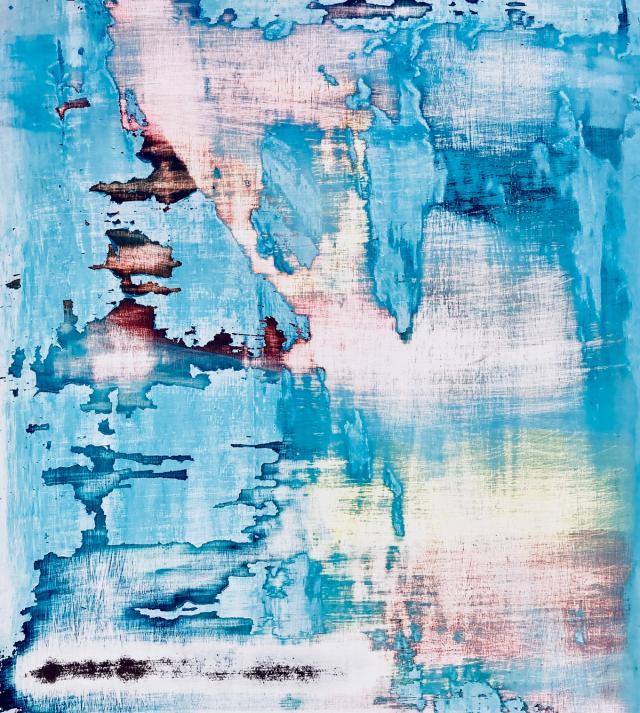
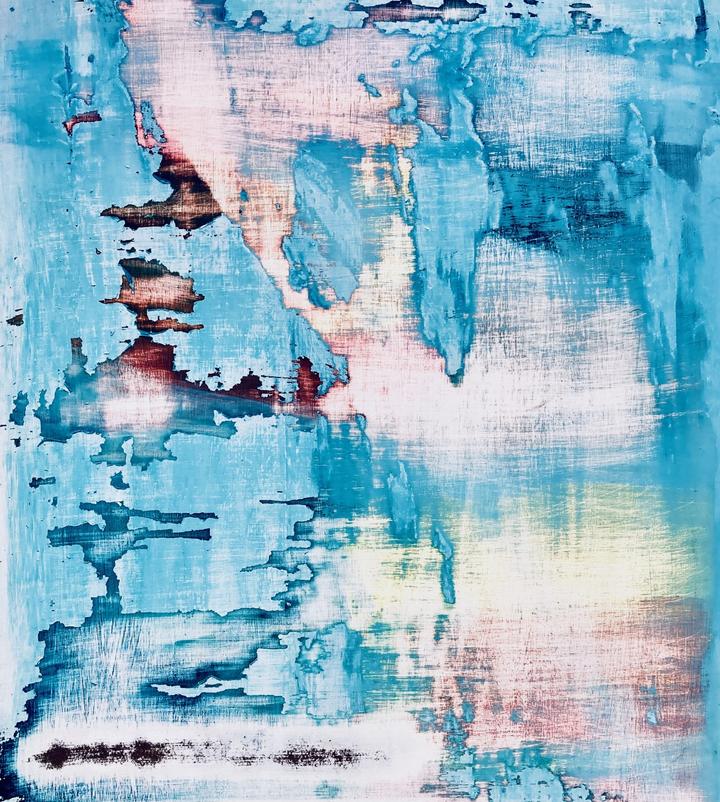
Image: The Heart of Haibun by Kevin Beary. Acrylic on Masonite. 16 x 24 inches. 2010. By permission.
Also available from Roberta Beary at O:JA&L:
https://youtu.be/C0-r9i1fI64
OJAL Art Incorporated, publishing since 2017 as OPEN: Journal of Arts & Letters (O:JA&L) and its imprints Buttonhook Press, HOT BUTTON PRESS Contemporary Issues, and HIGH BUTTON PRESS Contemporary Art, supports writers and artists worldwide.

The Buttonhook Press Masters Series
The Buttonhook Press Masters Series (from OPEN: Journal of Arts & Letters and its Buttonhook Press imprint) gathers acclaimed writers for concise, downloadable chapbooks that pair fresh work with candid reflections on craft. Each installment—often framed by an interview with an associate editor—opens a window onto how masters of poetry, prose poetry, flash fiction, and related hybrid forms build voice, compression, and surprise. Designed as a reader’s invitation and a writer’s toolbox, the series celebrates literary art that moves fast, cuts deep, and lingers long after the last line.
Click on the titles below to explore or download the free PDF chapbooks.
Prose Poetry and Flash Discourse
The Buttonhook Press Masters Series: Brian Clements on Prose Poetry
With an Interview by Associate Editor Pamelyn Casto
The Buttonhook Press Masters Series: Mark Budman on Flash Discourse
With an Interview by Associate Editor Pamelyn Casto
The Buttonhook Press Masters Series: Ray Gonzalez on Prose Poetry
With an Interview by Associate Editor Pamelyn Casto
The Buttonhook Press Master Series: Michael Martone on Flash Fiction
With an Interview by Associate Editor Pamelyn Casto
The Buttonhook Press Master Series: Roberta Allen on Flash Fiction
With an Interview by Associate Editor Pamelyn Casto
The Buttonhook Press Master Series: Peter Conners on Flash Fiction
With an Interview by Associate Editor Pamelyn Casto
The Buttonhook Press Masters Series: Maxine Chernoff on Prose Poetry
With an Interview by Associate Editor Pamelyn Casto
The Buttonhook Press Masters Series: Pedro Ponce on Flash Fiction
With an Interview by Associate Editor Pamelyn Casto
The Buttonhook Press Masters Series: Kent Dixon on Flash Fiction & Nonfiction
With an interview by Associate Editor Pamelyn Casto
Experimental Discourse
The Buttonhook Press Masters Series: Jim Meirose on Experimental Discourse (XP)
With an interview by Associate Editor Warwick Newnham
Poetry: All forms & styles
The Buttonhook Press Masters Series: Poetry from Bruce McRae
With an Interview by Associate Editor Jeff Streeby
The Buttonhook Press Masters Series: Poetry from Richard Widerkehr
With an Interview by Associate Editor Jeff Streeby
More titles in press

- 2026 Masters Series
- academic writing
- article: flash fiction
- Associate Editor Pamelyn Casto
- available titles
- buttonhook press
- Casto interviewer
- chapbook series
- creative writing
- explication
- Featured writer
- Featured Writer Interview
- Featured Writer: Roberta Beary
- haibun
- interpretation
- litcrit
- literary arts
- literary criticism
- lyric poetry
- mixed forms
- narrative poetry
- O:JA&L Masters Series
- poetry
- textual criticism
- The Art of Haibun